Best Garage Floor Epoxy Coatings Reviewed (2026)
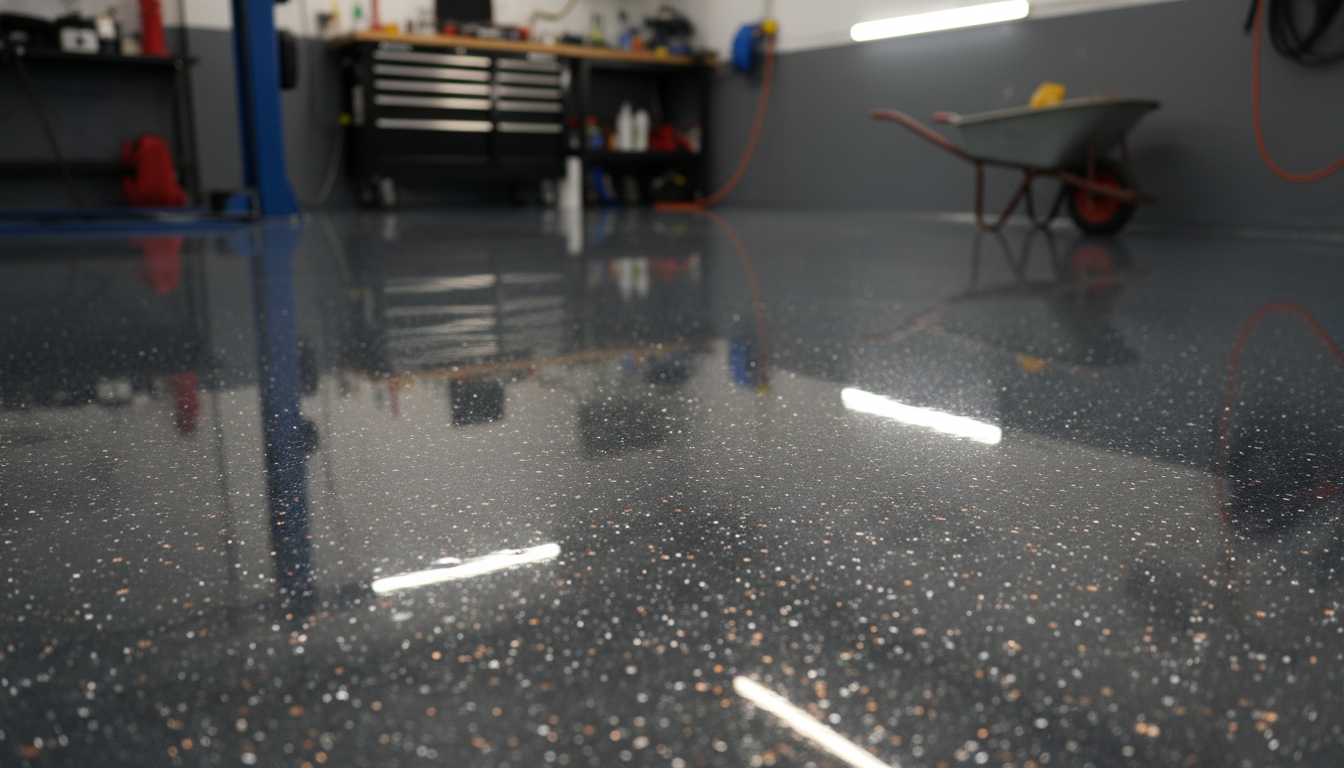
Searching for epoxy coating reviews usually means you’re close to buying and don’t want to waste $200+ on something that peels in six months. Here’s what actually separates good products from frustrating ones, plus specific picks across different budgets and use cases.
What Makes or Breaks an Epoxy Coating
Most failures aren’t product failures—they’re prep failures. That said, formulation matters. Water-based epoxies are easier to apply but thinner (typically 2–3 mils dry film thickness). Solvent-based and 100% solids epoxies run 4–10+ mils and hold up dramatically better under hot tire pickup, chemicals, and abrasion.
The other variable is the hardener ratio. Cheap big-box kits often skimp on hardener, which means lower cross-link density and a softer final film. You’ll notice it when a floor that looked fine in spring starts dulling and scuffing by fall.
Surface profile is the third leg. Acid etch alone usually hits 2–3 mils of profile. Shot blasting or diamond grinding gets you 4–6 mils. Higher-solids products need more profile to bond—skip that step and even a premium coating will lift.
Rust-Oleum EpoxyShield: The Baseline
Rust-Oleum EpoxyShield (the 2.5-car garage kit, around $130–$160) is the default recommendation at every hardware store. It’s water-based, 47% solids, and genuinely easy to apply. For a lightly used garage with a clean, etched slab, it looks great for 2–3 years.
Where it falls short: hot tire pickup is a known issue. If you park a car that’s been driven hard in summer heat, you’ll eventually pull chunks of coating off the floor when the tire cools. The water-based formula also has a limited recoat window, and adhesion on questionable slabs is marginal.
Best for: DIY first-timers, rental properties, workshops without vehicle traffic.
ArmorPoxy 2-Part Epoxy: Mid-Range That Earns It
ArmorPoxy’s two-part floor kits run $200–$350 depending on coverage and finish. It’s a higher-solids, solvent-based system—closer to what professional crews use without requiring contractor-grade equipment. Pot life is shorter (you need to move), but the cured film is noticeably harder.
Hot tire resistance is significantly better than EpoxyShield. ArmorPoxy also bonds well over slabs with minor surface issues, partly because the solvent carrier penetrates slightly deeper. The tradeoff is ventilation—you need fans and open doors for the full cure cycle.
Best for: Daily-driver garages, two-car slabs that see real traffic.
Penntek Polyurea/Polyaspartic: The Professional Standard
Penntek is the brand behind a large share of professionally installed polyaspartic garage floors. These aren’t DIY products—installation is through certified dealers—but they consistently top long-term durability reviews. A full Penntek system (base coat, color flake, topcoat) typically runs $3–$6 per square foot installed.
Polyaspartics cure faster than epoxy, handle UV without yellowing, and the tensile strength numbers beat standard epoxy across the board. The chip/flake broadcast layer also adds meaningful texture and hides concrete imperfections well.
Best for: Long-term installs, anyone who’s already tried DIY and wants something that outlasts the house.
Drylok E1 1-Part Epoxy: Honest About Its Limits
Drylok E1 is marketed as a one-part epoxy floor paint, and that label is doing a lot of work. It’s more accurately an epoxy-modified latex—easy to apply, low odor, cheap (around $50–$70 per kit). It works fine as a decorative coating on basement floors or utility spaces with no vehicle traffic.
On a garage floor? It won’t hold. Expect peeling within a year under normal use. Not a knock on Drylok specifically—this is the limitation of any single-part “epoxy” product. Genuine epoxy requires a two-component mix that cross-links during cure; single-part products can’t replicate that chemistry.
Skip it for: Any garage floor that sees tires or regular foot traffic.
Key Decision Criteria
Before picking a product, nail down these four things:
- Traffic type: Foot traffic only → water-based is fine. Vehicle traffic → two-part minimum, polyaspartic if budget allows.
- Climate: Freeze-thaw cycles stress thin coatings. Go thicker (100% solids or polyaspartic) in cold climates.
- Slab condition: Visible cracks, previous coating, or moisture issues → skip DIY kits and get a professional assessment first.
- Budget reality: A $150 kit that fails in two years costs more than a $400 professional-grade system that lasts ten.
What the Bad Reviews Are Actually Telling You
When you dig into one-star reviews for even the better products, a pattern emerges: peeling at the edges, lifting near expansion joints, bubbling in patches. Almost every case traces back to inadequate prep—insufficient profile, residual moisture, or contamination from oil or curing compounds.
A product with 200 five-star reviews and 30 one-stars isn’t necessarily inconsistent. It’s often consistent, and the one-stars represent installs where prep was skipped or rushed. Read the critical reviews for prep complaints specifically, not just outcome complaints.
Bottom line: ArmorPoxy or a comparable two-part solvent-based epoxy hits the best value sweet spot for most DIY garages. If you’re parking cars daily and want it done once, skip the kits entirely and price out a Penntek or similar polyaspartic install—the long-term math usually works out.