Garage Floor Epoxy Coating: Hire Local or DIY?
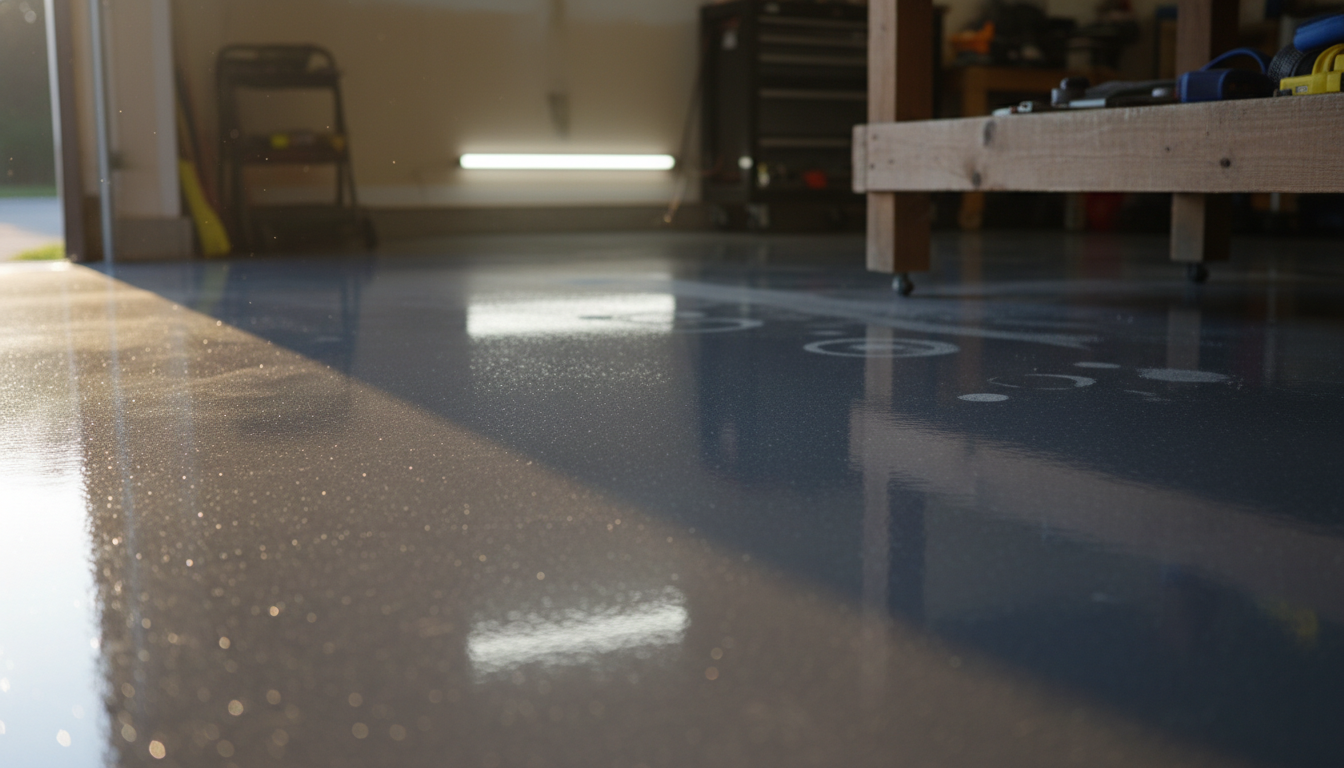
You’re looking for someone local to coat your garage floor — or you’re weighing whether to hire out versus do it yourself. The honest answer: both paths work, but they suit different situations. Here’s how to think through it.
What “Garage Floor Epoxy Coating” Actually Means
Not all garage floor coatings are the same product, and local contractors don’t all offer the same system. There are three common types you’ll encounter:
- Water-based epoxy — lower VOCs, easier application, thinner build. Fine for light residential use.
- Solvent-based or 100% solids epoxy — thicker, harder, more durable. What most pros use.
- Polyurea/polyaspartic — fast cure, UV-stable, usually the premium tier. Often marketed as a “one-day” system.
When you call a local contractor, ask specifically which system they install. A company selling a “polyurea coating” is offering something meaningfully different — and usually more expensive — than a standard epoxy. Neither is automatically better for every situation, but you deserve to know what you’re buying.
How to Find a Qualified Local Installer
“Near me” searches surface a lot of franchise operations alongside independent contractors. Both can do excellent work. The franchise model (think Garage Force, GarageExperts, or Penntek dealers) gives you some standardization; independent shops often have more flexibility on pricing and system selection.
To vet anyone you’re considering:
- Ask for photos of jobs done in the last six months, not a highlight reel from 2019.
- Confirm they do mechanical surface prep — shot blasting or diamond grinding, not just acid etching. This is the single biggest factor in coating adhesion and longevity.
- Get the product brand and line in writing. “Our proprietary epoxy” is a red flag if they won’t name the manufacturer.
- Check Google and Yelp reviews specifically for mentions of peeling, bubbling, or poor adhesion at the six-to-twelve-month mark.
Avoid anyone who quotes you over the phone without seeing the floor. Concrete condition — cracks, moisture issues, previous coatings — affects both the prep process and the final price.
What It Costs to Hire a Pro
Prices vary by region, floor size, and system type, but general ranges hold up across most markets.
A standard two-car garage (roughly 400–500 sq ft) typically runs:
- Basic water-based epoxy: $1,200–$2,000 installed
- 100% solids epoxy with flakes: $2,000–$3,500
- Polyurea/polyaspartic system: $3,000–$5,000+
Those ranges assume mechanically prepped concrete in reasonable condition. Add cost for crack repair, moisture mitigation, or removing an existing failed coating. Some contractors charge a separate shot-blasting fee; others bundle it. Ask upfront.
Don’t anchor on the lowest bid. A $900 epoxy job that peels in 18 months costs more than a $2,800 job that lasts 15 years.
When DIY Makes Sense
If the floor is in good shape, you have a weekend, and you’re willing to rent a diamond grinder, a DIY system can absolutely hold up. The products have improved significantly. Rust-Oleum’s EpoxyShield and Armor Garage’s 100% solids systems are legitimate options for residential use.
DIY makes sense when:
- Your floor has no significant moisture vapor emission issues (do a plastic sheet tape test for 24 hours first)
- You’re coating a single-car garage or smaller area
- You’re comfortable with equipment rental and have time for proper prep
- Budget is a real constraint
DIY gets risky when the concrete is heavily contaminated with oil, has an existing coating, or when you’re working in a climate with wide temperature swings. Epoxy application temperature windows are real — most products want 50–90°F with low humidity. A bad application day means a bad floor.
Questions to Ask Before Signing Any Contract
Whether you’re hiring local or buying materials yourself, these questions cut through the noise:
- What’s the total dry film thickness? A professional system should hit at least 20–30 mils total build. Thin coatings fail faster.
- What’s the warranty, and what does it actually cover? Peeling within two years should be covered. Read the exclusions.
- How long before I can park on it? Polyurea cures in 24 hours; some epoxy systems need 72 hours or more before vehicle traffic.
- What prep method are you using? Grinding = good. Acid etch only = acceptable for DIY, not for a $3,000 professional job.
- Do you offer a topcoat? A polyurethane or polyaspartic topcoat dramatically improves chemical resistance and UV stability.
Finding the Right Fit Locally
Google Maps is a reasonable starting point, but filter by reviews mentioning specific products and prep methods — not just “great job, very professional.” Angi and HomeAdvisor can surface names, but vet anyone you find independently.
Ask neighbors or local car enthusiasts who’ve had work done. Word-of-mouth on a coating that’s two or three years old and still looks good is worth more than any online listing.
If a contractor is running a heavy promotion — “50% off this weekend only” — that’s pressure sales, not a deal. Good installers stay busy. They don’t need to manufacture urgency.
Bottom line: A professionally installed polyurea or high-solids epoxy system from a vetted local contractor is the most durable option for most homeowners. If budget is tight and the floor is sound, a quality DIY epoxy kit is a legitimate alternative — but only if you do the prep work right.